
Getting around Uganda is an adventure in itself, characterized by a mix of fast-paced, sometimes chaotic, yet highly efficient modes of transport. Whether you're a local commuter or a curious traveler, understanding Uganda's diverse transport system is key to navigating its bustling cities and scenic rural areas. Here is a breakdown of the various forms of transportation that keep Uganda moving:
1. The Boda-Boda (Motorcycle Taxi)
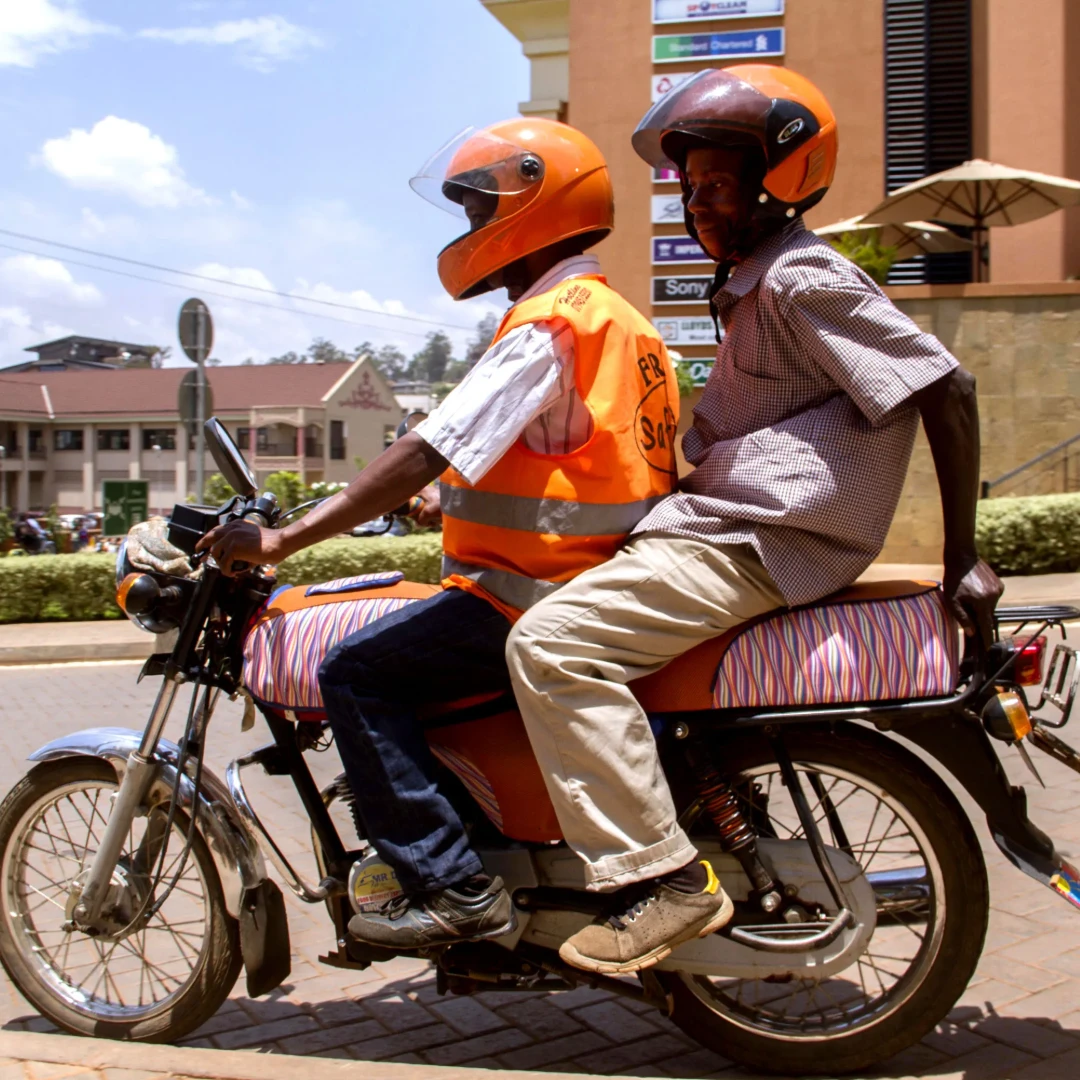
The boda-boda is arguably the most iconic form of transport in Uganda, especially in crowded urban centers like Kampala.
- What they are: Motorcycle taxis, named after the term "border-to-border" as they historically carried passengers and goods across the Uganda-Kenya border.
- The appeal: They are fast, cheap, and can weave through the notorious traffic jams and reach places larger vehicles cannot. This makes them the quickest way to get around the city.
- Modern twist: Mobile apps like SafeBoda and Uber have entered the market, offering more organized, often safer (with provided helmets and tracking), and standardized-fare services, making them a popular choice for visitors who want to avoid negotiating or risk being over charged for a trip.
2. The Matatus (Minibus Taxis)
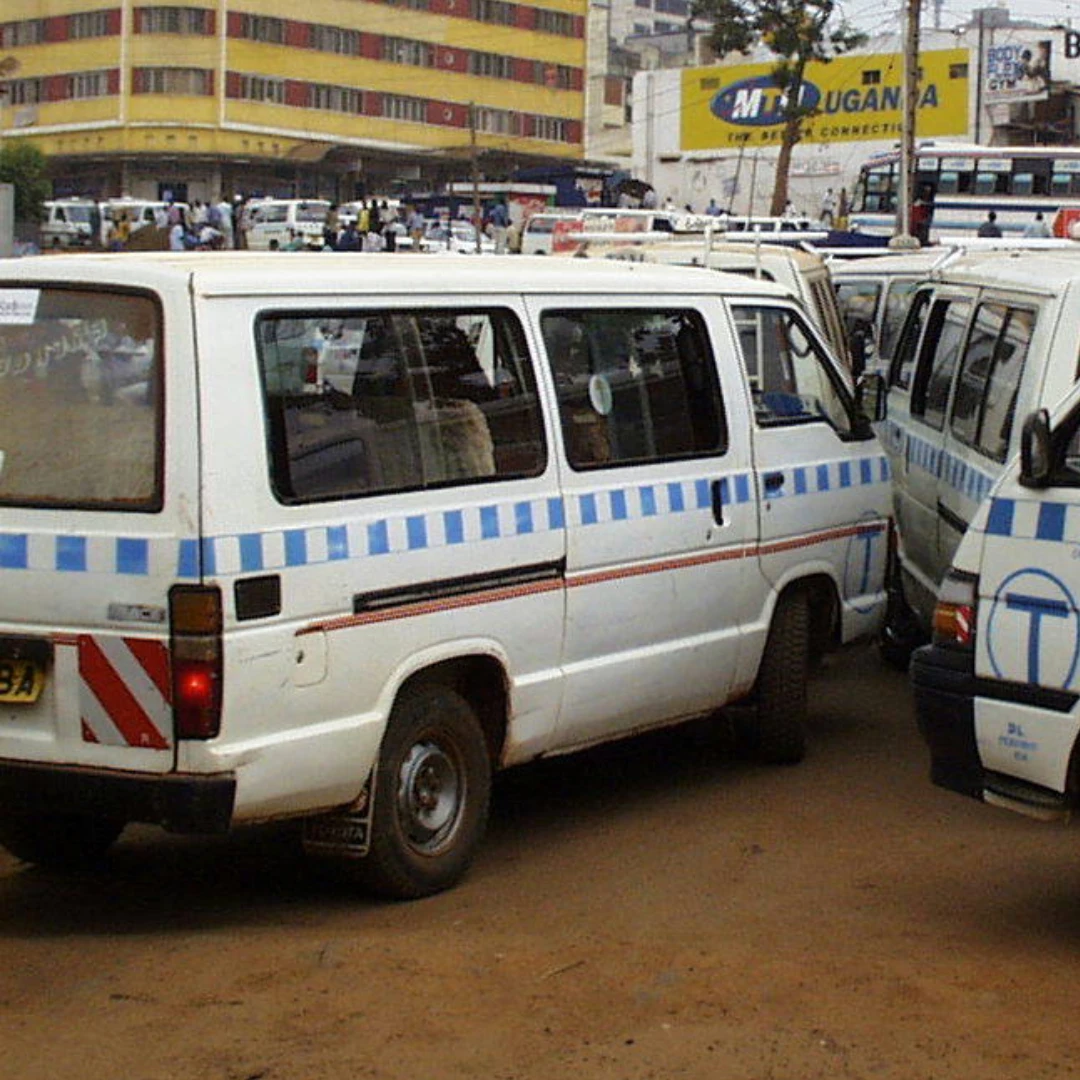
For urban and shorter inter-city travel, the matatu is the backbone of public transport.
- What they are: White, 14-seater minibuses (often referred to simply as "taxis" by Ugandans).
- How they work: They operate on fixed routes and are a budget-friendly, common way for locals to commute. They pick up and drop off passengers anywhere along the route.
- The experience: They are often crowded and can be an overwhelming experience in major parks like Kampala's New or Old Taxi Parks. You'll need to listen for the conductor shouting the destination to find the right one. They leave only when full, so departure times are never set.
3. Special Hire Taxis (Private Cars)
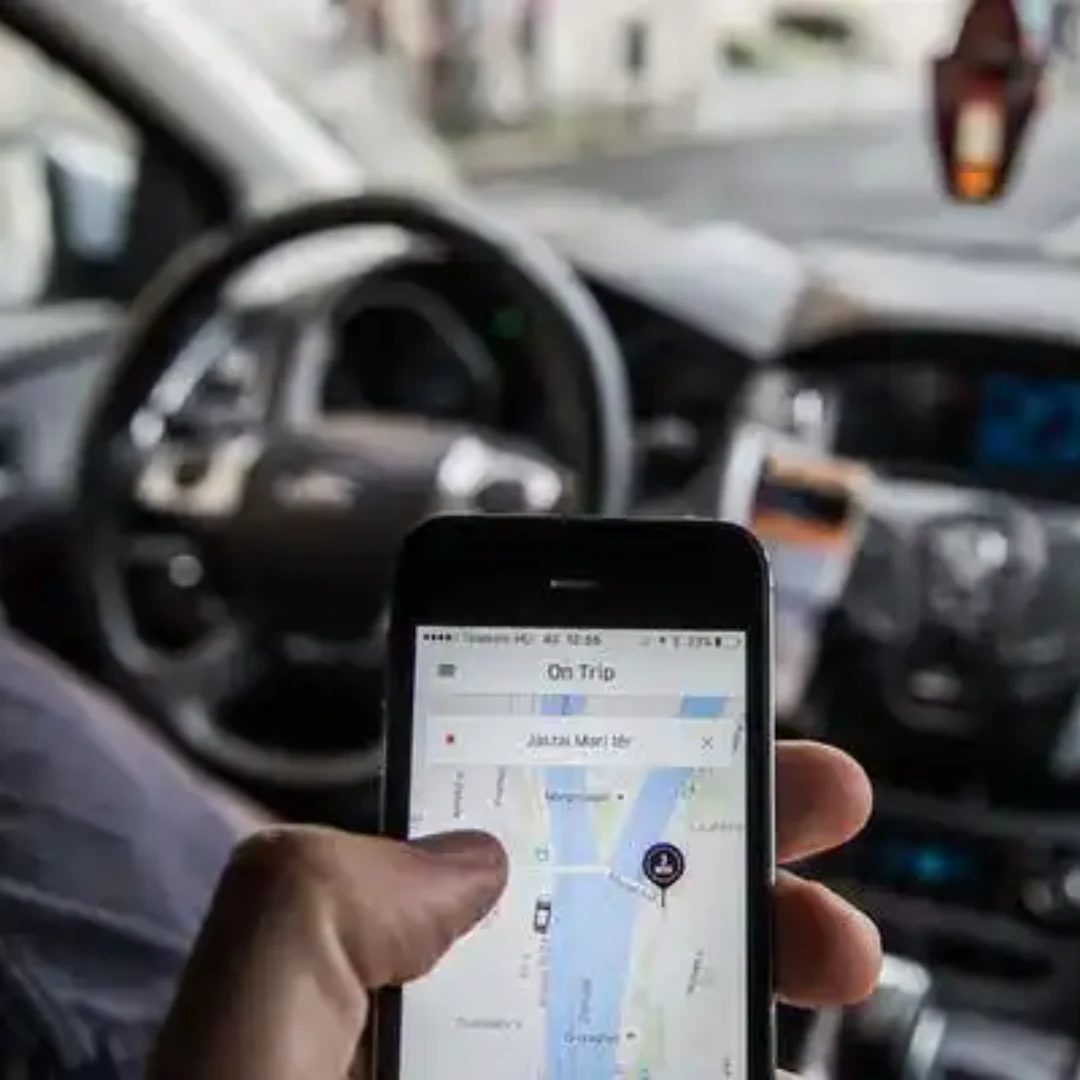
These are the closest thing to a conventional taxi service for private, door-to-door transport.
- What they are: Standard saloon cars that act as private taxis.
- The convenience: They offer a more comfortable and secure experience compared to matatus or unregulated boda-bodas, making them the preferred choice for group travel or getting around late at night. Traditional taxi fares in Uganda are usually negotiable, so it's important to agree on a price before starting your journey. Ride-hailing apps like Uber and Bolt simplify this process by providing fixed, transparent pricing and the ability to track your ride; eliminating the need for price negotiations.
4. Long-Distance Buses and Coaches
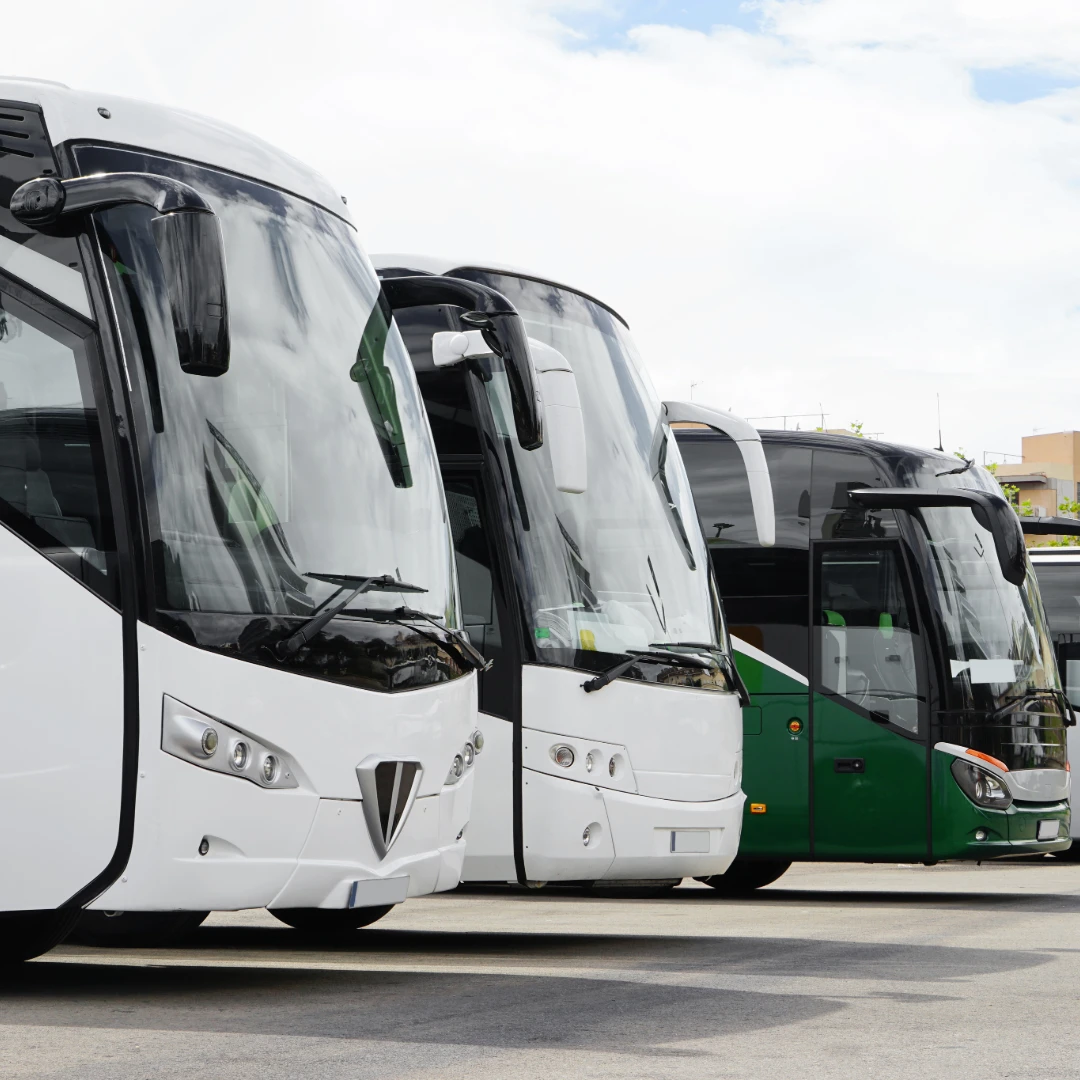
To travel between major towns and cities across Uganda, large buses and coaches are the primary choice.
- The service: Companies offer scheduled services that are generally more comfortable and faster than matatus for long journeys, as they don't stop as frequently.
- Reliability: While most are reliable, some companies are often cited as the most comfortable and punctual, offering set departure times.
- Connections: These bus lines also provide important international connections to neighboring countries like Kenya, Rwanda, and Tanzania.
5. Water Transport (Ferries and Boats)
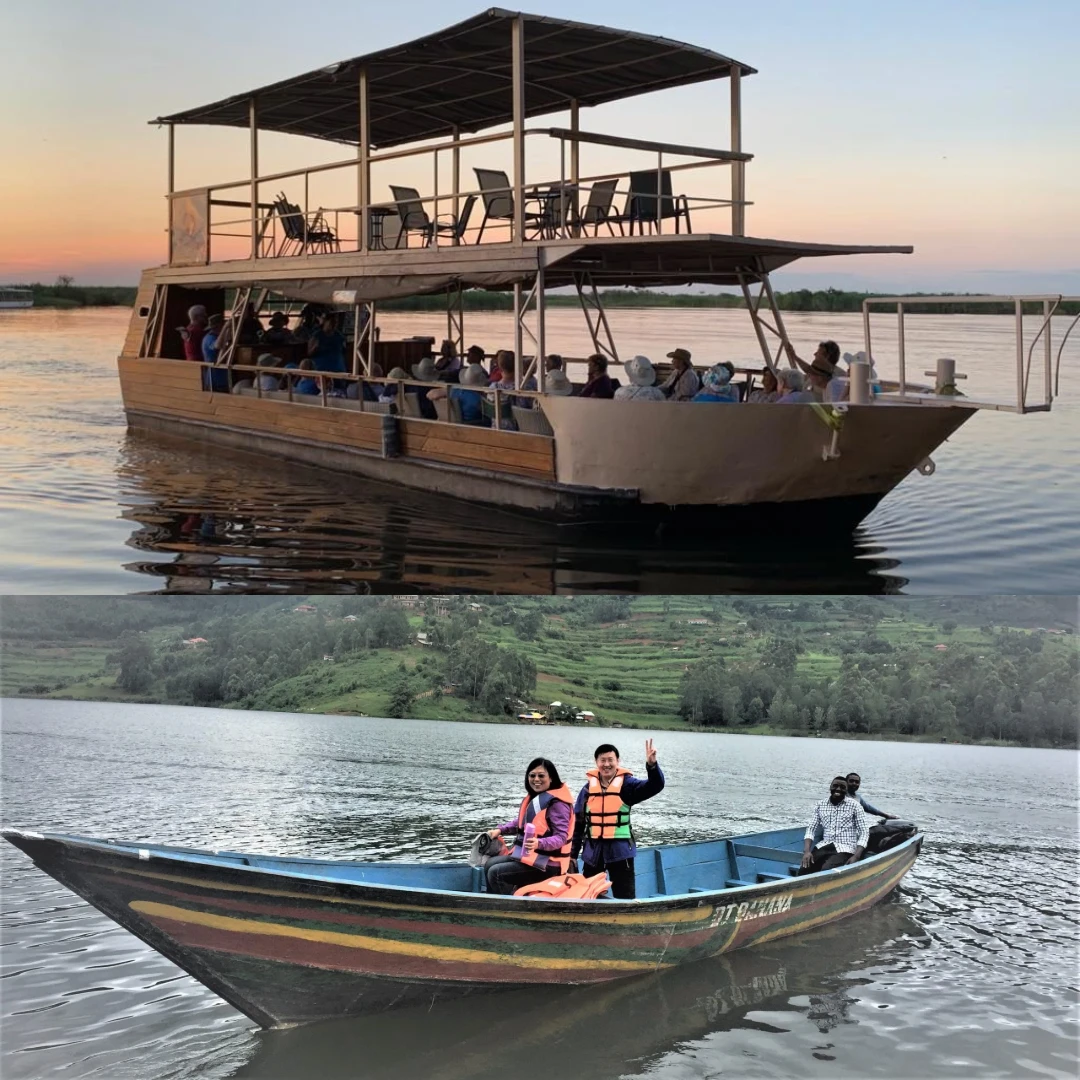
Uganda is home to a significant portion of Lake Victoria, the River Nile, and other large lakes, making water transport essential for some communities.
- Ferries: Regular ferries and cargo vessels link the mainland to islands, transporting both passengers and vehicles.
- Local boats: Smaller canoes and boats are used extensively in fishing communities and on lakes like Kyoga, Edward, and George for local transit and trade.
6. Rail and Air Transport
While less central to everyday passenger travel than road transport, both rail and air play a role.
- Rail: Uganda’s railway network is mostly utilized for cargo transport, linking the country to the Kenyan port of Mombasa. Passenger rail services are very limited, with only a few operating lines, primarily for commuters in and around Kampala.
- Air: Domestic flights, though expensive, are available to reach certain far-flung regions or national parks, saving days of road travel. Entebbe International Airport (EBB) remains the primary hub for international arrivals.
From the dizzying speed of a boda-boda to the long-haul journey on a coach, transportation in Uganda is a dynamic mix of necessity and adventure. It’s a reflection of the nation's energy; constantly moving, full of life, and an integral part of the travel experience in the Pearl of Africa.